
Patient guide to bacterial vaginosis
This page was translated with AI. Only the Danish text has been reviewed by a human — read the Danish version.
About bacterial vaginosis
Bacterial vaginosis (BV), also called vaginal inflammation or vaginal catarrh, is an imbalance in the natural bacteria in the vagina, causing increased discharge and an unpleasant vaginal smell.
BV is not a sexually transmitted infection, which means the condition is not passed on to sexual partners. However, sexual activity can encourage BV.
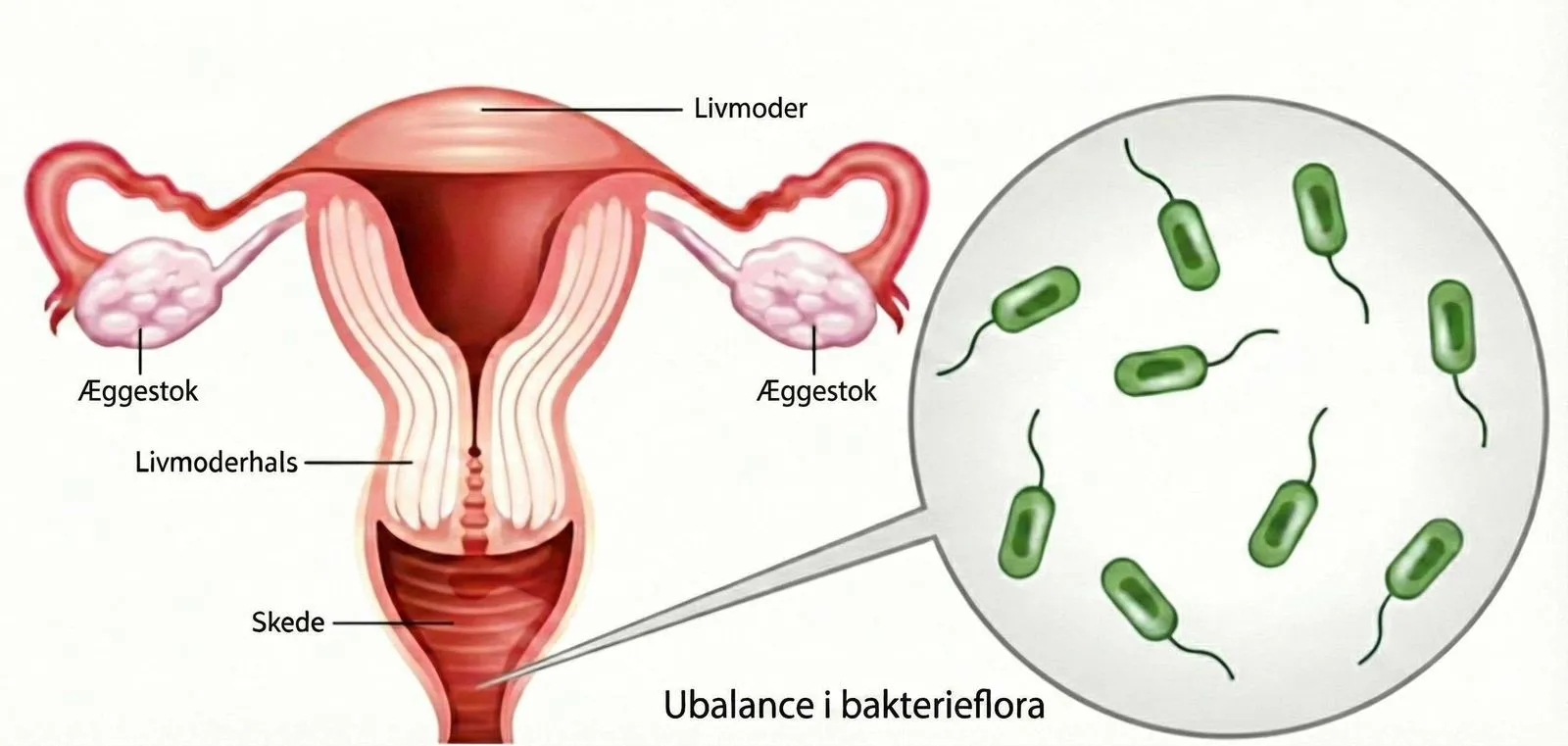
Illustration showing how bacterial vaginosis is caused by an imbalance in vaginal bacteria
Treatment of bacterial vaginosis
In mild cases, BV is treated by trying probiotics first. For worse symptoms, or if this does not work, antibiotics are used.
Treatment with probiotics
Treatment with probiotics/lactic acid bacteria, applied in the vagina and/or taken as tablets (for example Multigyn Actigel and/or Lactocare Feminine), may sometimes be enough for mild symptoms of BV. The pharmacy can advise you on how to use them.
Contact us if the treatment does not work.
Treatment with antibiotics
- Follow our instructions for taking antibiotics (also on the medicine box).
- Read the patient information leaflet, and contact us if you suspect serious side effects.
- Always complete the full course of treatment, even if the symptoms go away during it.
Follow-up
- Treatment normally works within a couple of days. If there is no improvement when treatment is complete, or if the condition returns, contact us again.
Preventing bacterial vaginosis
- Take probiotics as described above. Ask the pharmacy for advice.
- Avoid vaginal rinsing/douching and perfumed intimate care products.
- Use a condom during sex.
Clinically updated 27 November 2025
If you are in doubt, call us
Call the clinic on 73 70 81 10