
Patient guide to the copper coil
This page was translated with AI. Only the Danish text has been reviewed by a human — read the Danish version.
About the copper coil
A copper coil is a small T-shaped plastic device with copper wire around it. It is placed in the womb and works as contraception. A copper coil can be a good choice if you want a hormone-free form of contraception.
The copper coil works by releasing small amounts of copper locally in the womb. Copper affects sperm, making it harder for them to fertilise an egg. The copper coil also affects the environment in the womb to prevent pregnancy.
The copper coil is a very effective form of contraception.
The copper coil does not protect against sexually transmitted infections. Use a condom if there is a risk of sexually transmitted infections, for example with a new partner.
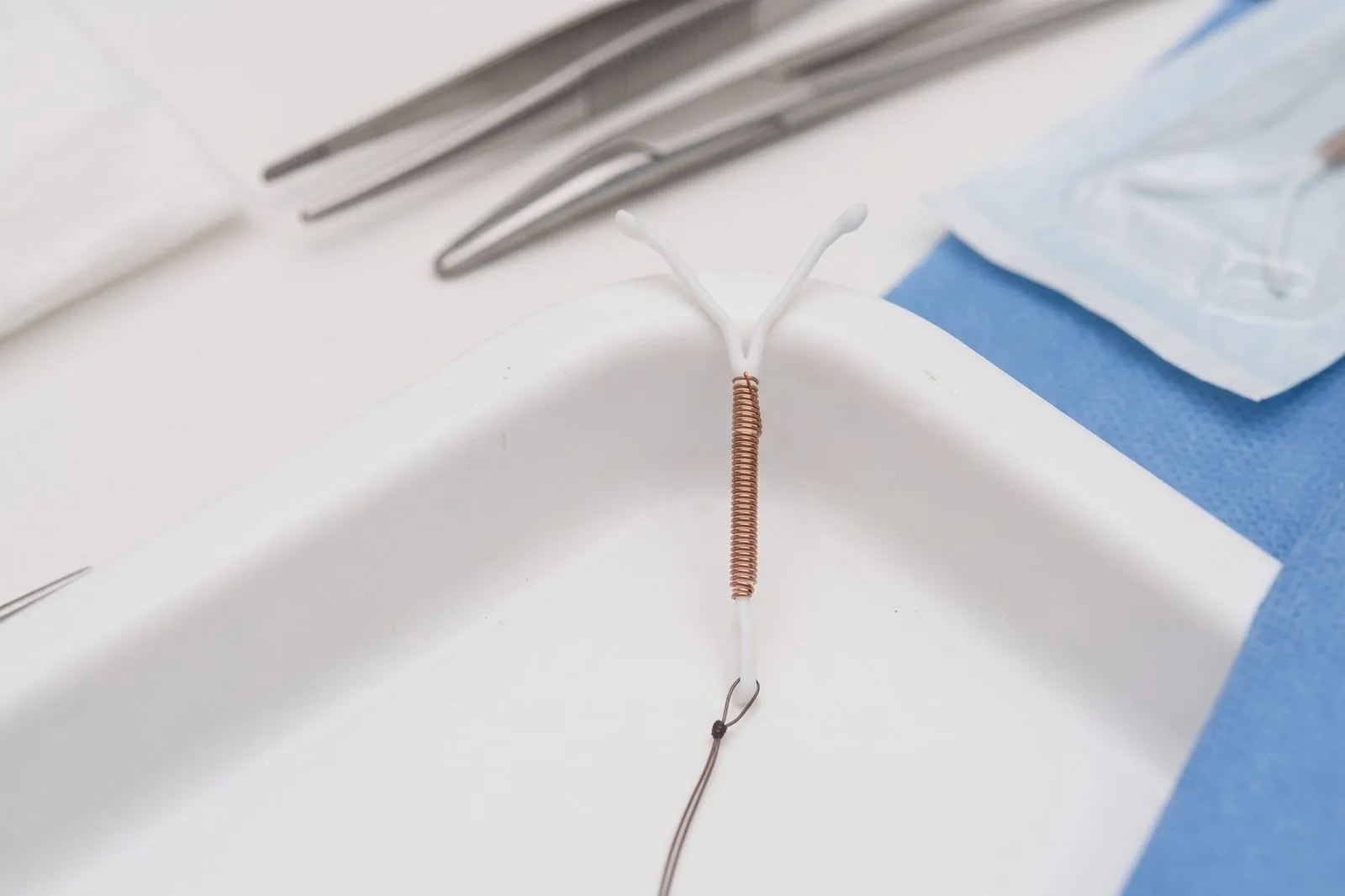
The copper coil is a hormone-free form of contraception placed in the womb during a gynaecological examination.
How a copper coil is fitted
You buy a copper coil over the counter at the pharmacy. There are different manufacturers, but the coils are all essentially the same.
The copper coil is fitted during a gynaecological examination. It is important to be certain that you are not pregnant when the coil is fitted. You must therefore use another form of contraception, for example a condom, until your coil is fitted.
It is best to fit the coil 4-10 days after your period starts. This ensures that you are not pregnant. The copper coil protects against pregnancy from the first day.
Fitting usually takes only a few minutes. The doctor passes the coil through the cervix and places it in the womb. Two thin threads are trimmed and left at the top of the vagina. The threads are used later when the coil needs to be removed. Some people feel only slight discomfort during fitting, while others have period-like pain.
It is a good idea to take painkillers, for example 2 tablets of paracetamol at 500 mg each and possibly 2 tablets of ibuprofen at 200 mg each, about 30 minutes before fitting, if you can take them. They are available over the counter.
After fitting, you may have dull aching pain and light bleeding for a few days. This is normal. You can usually continue normal activities the same day, but some people need to rest for the rest of the day.
Serious complications are rare. There is a small risk of pelvic inflammatory disease in the period after fitting, and in rare cases the coil can fall out or sit in the wrong position. Very rarely, the coil can make a hole in the wall of the womb during fitting.
After fitting, you should avoid sex, using tampons or menstrual cups, and bathing in a bath, the sea or a swimming pool for 48 hours to reduce the risk of pelvic inflammatory disease.
Contact the clinic if, after fitting, you have severe or increasing pain, fever, foul-smelling discharge or heavy bleeding, or if you think the coil has fallen out.
Side effects
Possible side effects include:
- Heavier periods
- Longer periods
- More period pain
- Spotting or irregular bleeding
- A dull ache in the lower abdomen
Most symptoms become less troublesome over time, but some people continue to have heavier periods or more period pain than before.
The copper coil does not contain hormones and therefore does not cause hormonal side effects.
Checks at the clinic
After having a copper coil fitted, you must come for a check at the clinic after 3 months. You do not need to come for an annual check at the clinic.
The copper coil can stay in place for 5 years. After that, contact the clinic to have it replaced or removed.
It is important to contact the clinic in the following situations:
- If side effects are very troublesome
- If you have bleeding triggered by sex
- If you want to change your form of contraception or have the coil removed
Clinically updated 24 June 2026
If you are in doubt, call us
Call the clinic on 73 70 81 10