
Patient guide to corns and calluses
This page was translated with AI. Only the Danish text has been reviewed by a human — read the Danish version.
About corns
When an area of skin is exposed to continued pressure, the skin thickens. This produces a callus, which is the skin’s way of protecting itself from continued strain. Calluses are often found on the feet, hands and other areas where the skin is exposed to pressure or friction.
In some cases, a hard central core can form in an area of callused skin. This core can press down into the skin and feel like a thorn. This is called a corn.
Corns most often develop on the toes or the ball of the foot. Not all calluses cause pain. Treatment is usually only needed if the callus or corn causes discomfort or pain.
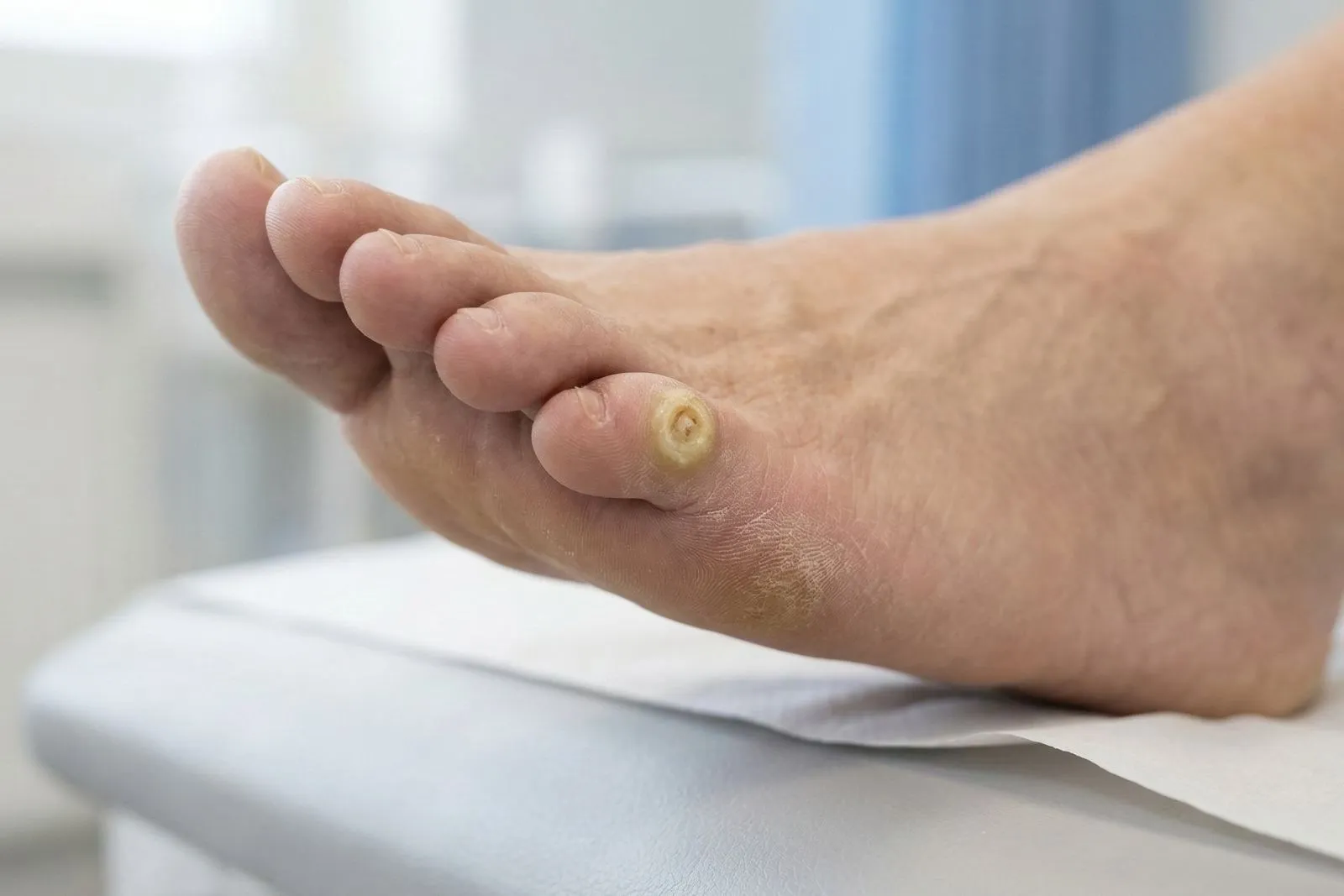
A corn is a hard core in an area of thickened skin, often developing on the toes or the ball of the foot.
Treatment of corns
The most important treatment is to relieve pressure on the area.
- Wear shoes that do not press on your feet. There should be plenty of room in both the length and width of the shoe.
- Choose shoes with a smooth inside and no seams that could press against the skin.
- Use ring-shaped pads or corn plasters. Corn plasters may contain salicylic acid, which dissolves the hard skin.
Corn plasters are available over the counter at the pharmacy.
If you have reduced sensation in your feet, for example due to diabetes, you should not use plasters containing salicylic acid.
If symptoms continue, a podiatrist can remove the top layer of hard skin by cutting it away. A doctor’s referral to a podiatrist is not normally given for corns, so you usually pay for the treatment yourself.
Even if the corn is removed, it can return if pressure on the area continues. The risk of recurrence is about 30-50 %.
Preventing corns
The most important prevention is to avoid footwear that presses or rubs.
If you have calluses on your feet, regular foot care can reduce discomfort.
- Foot baths
- Rubbing hard skin with a pumice stone
- Using a softening cream for hard skin
Clinically updated 9 March 2026
If you are in doubt, call us
Call the clinic on 73 70 81 10