
Patient guide to fungal nail infection
This page was translated with AI. Only the Danish text has been reviewed by a human — read the Danish version.
About fungal nail infection
Fungal nail infection (caused by fungi called dermatophytes) is a common nail infection that many people experience at some point in life. The fungus thrives particularly in warm, moist conditions.
The infection rarely spreads between people, but it can spread from nail to nail or from skin to nail in the same person.
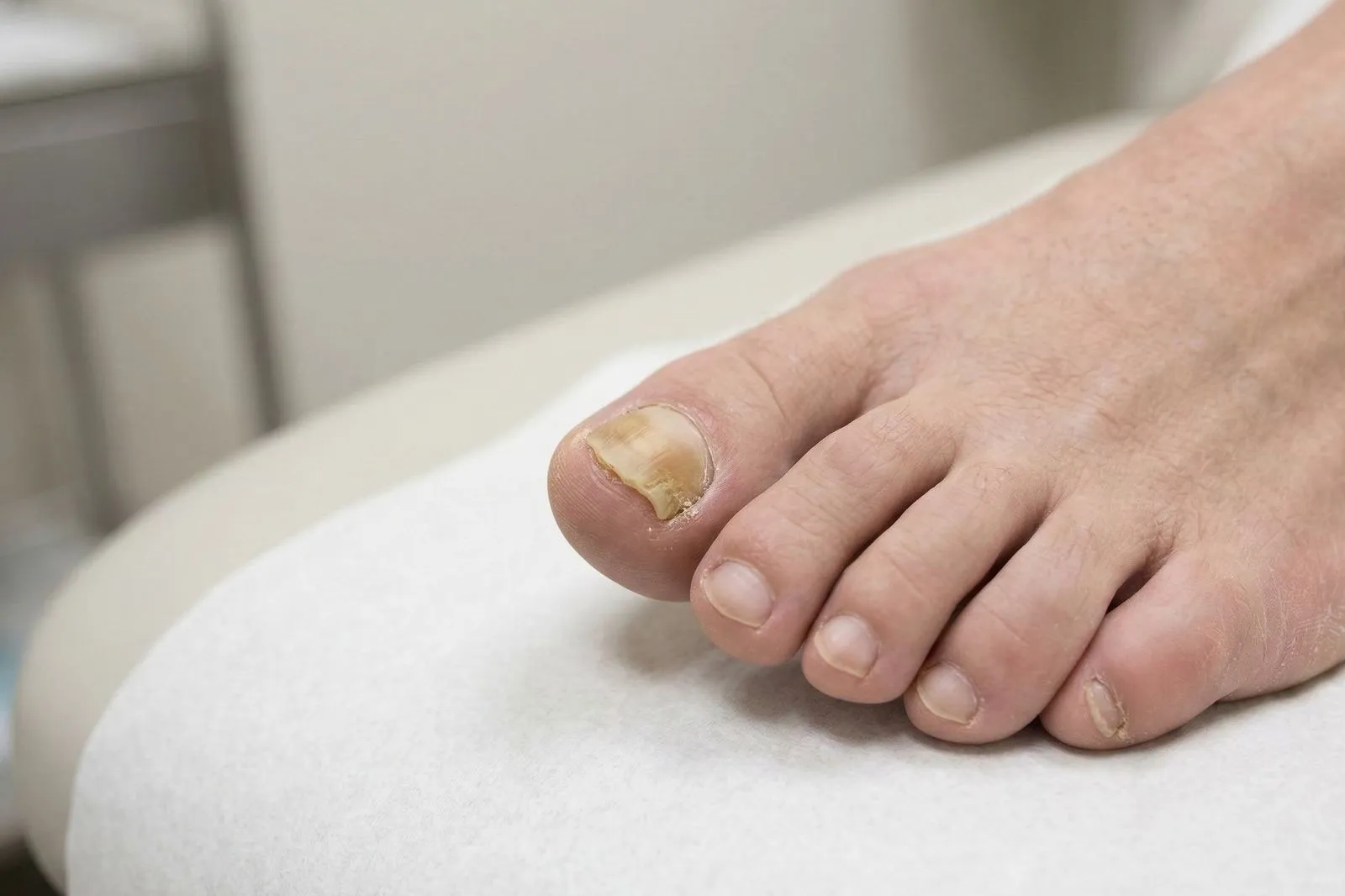
Toenail with typical changes caused by a fungal nail infection.
Treatment of fungal nail infection
Treatment of fungal nail infection often takes a long time and is not always completely effective. Tablet treatment can work, but may have side effects and requires blood tests before and during treatment. Topical treatment can be tried for mild or limited fungal nail infection, but often cannot clear the infection on its own. Combining topical treatment and tablets often gives the best results.
A number of daily measures can also help slow the infection and reduce the risk of it returning.
Tablet treatment with terbinafine (prescription required)
- Before starting treatment and again after one month, you need a blood test to check liver function, as terbinafine can affect the liver.
- Take the tablets as directed on the packaging (usually 1 tablet daily).
- Side effects can occur. Most are mild and temporary. See the patient information leaflet for more information.
- Contact a doctor immediately if you develop a rash, feel generally unwell or notice yellowing of the skin or eyes.
Topical treatment with Onytec or Finail medicated nail lacquer (over the counter)
- Apply the nail lacquer to the affected nails once a week. Finail may be used 1-2 times weekly.
- The products must only be used on the nails. Protect the skin around the nail.
- Continue treatment until the affected nail has grown out completely and looks normal. This usually takes up to 6 months for fingernails and 9-12 months for toenails.
- Stop treatment if a rash develops on the skin around the nail that is not caused by contact with the nail lacquer.
- The products must not be used during pregnancy.
Non-medical measures
- Let air reach your feet, and take your socks off when you get home.
- Change socks during the day, especially if your feet become warm or damp.
- Dry your feet thoroughly between the toes after bathing.
- Wear breathable shoes and go barefoot or wear open sandals from time to time.
- Alternate between several pairs of shoes.
- As fungal spores can remain in socks after normal washing, socks can be soaked in Rodalon for textiles for 24 hours.
- An antifungal shoe spray can be used to reduce fungus in footwear.
Follow-up
Contact the clinic if treatment does not have the desired effect.
Visible nail changes do not disappear immediately with treatment. They gradually disappear as a new, normal nail grows. As nails grow slowly, discolouration may still be visible for a time after treatment ends.
Clinically updated 9 March 2026
If you are in doubt, call us
Call the clinic on 73 70 81 10