
Patient guide to glue ear
This page was translated with AI. Only the Danish text has been reviewed by a human — read the Danish version.
About glue ear
The middle ear is connected to the back of the nose by the Eustachian tube. Among other things, this connection helps equalise pressure in the middle ears.
If the Eustachian tube becomes blocked, for example because of swelling during a cold, negative pressure develops in the middle ear. This can cause fluid to be released from the middle ear lining.
Fluid in the middle ear causes reduced hearing, and you will often feel discomfort and a blocked sensation in the ear. There are no viruses or bacteria in the fluid, so this is not a middle ear infection. However, the condition can also develop after a middle ear infection.
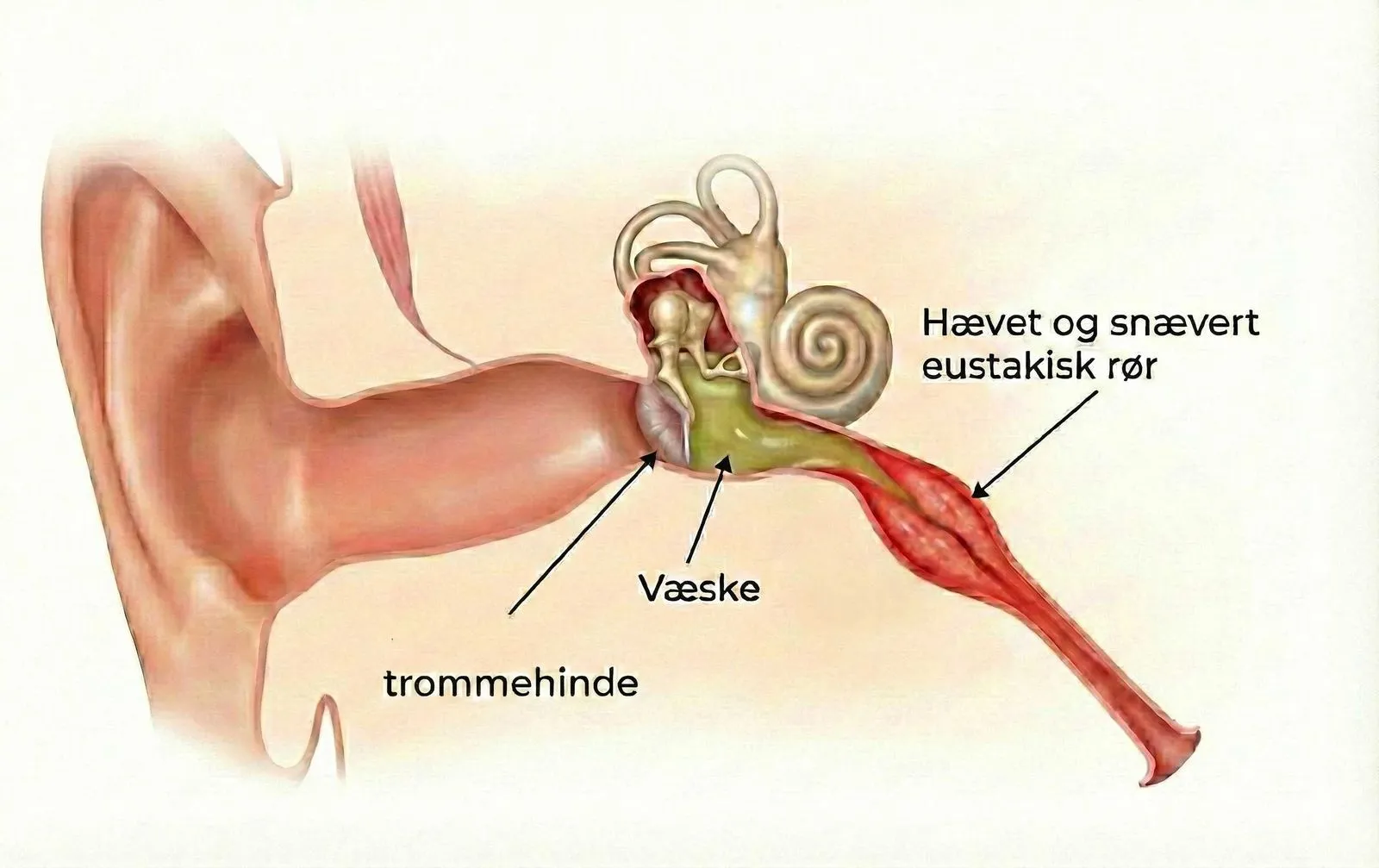
Illustration showing fluid built up in the middle ear
Treatment of glue ear
Fluid in the middle ear usually clears up on its own, and treatment is not necessary.
Trying to equalise the pressure using the Valsalva manoeuvre may help. This means holding your nose and mouth closed while trying to blow out.
If needed, you can take paracetamol for pain. Adults can take 1 g no more than 4 times daily.
Lying with your head raised may also help.
Follow-up
You need a follow-up appointment after about 8 weeks to confirm that the fluid has cleared on its own.
Clinically updated 12 January 2026
If you are in doubt, call us
Call the clinic on 73 70 81 10