
Patient guide to middle ear infection
This page was translated with AI. Only the Danish text has been reviewed by a human — read the Danish version.
About middle ear infection
A middle ear infection affects the lining of the middle ear. It can be caused by viruses and/or bacteria. The infection causes fluid and often pus to build up in the middle ear, increasing the pressure. This causes pain and a feeling of a blocked ear. Most people also develop a fever.
A middle ear infection often develops with a cold. You can have earache during a cold without it being a middle ear infection. It may simply be due to irritation of the lining and negative pressure in the middle ear.
Sometimes the eardrum bursts. This can be more painful when it happens, but afterwards the pain eases considerably and the fever falls. Pus may drain into the ear canal and out of the ear for a few days. The eardrum usually heals on its own within a couple of weeks, and lasting damage is rare. However, hearing may be reduced for several months afterwards.
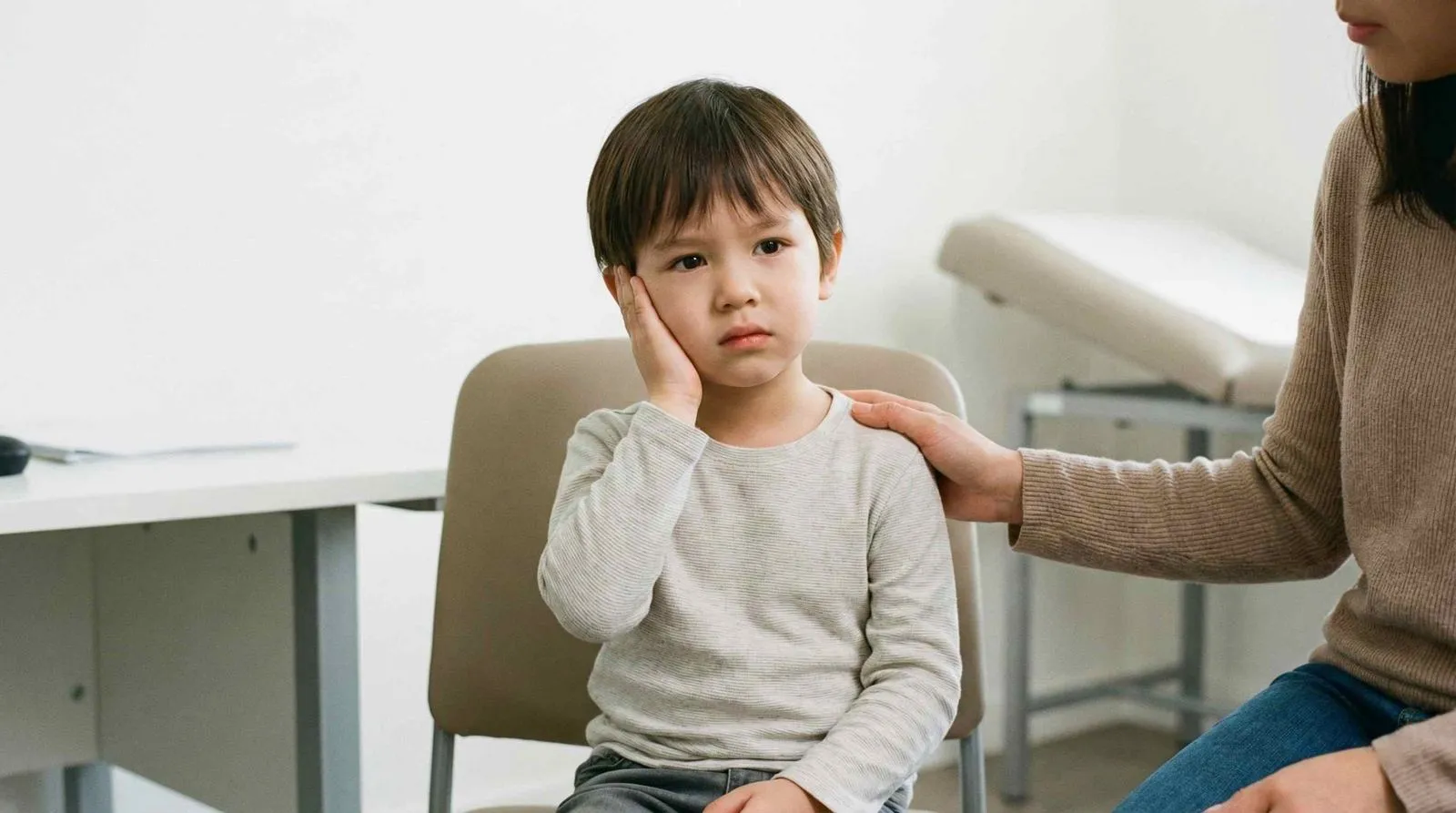
Child with ear discomfort from a middle ear infection in general practice
Treatment of middle ear infection
A middle ear infection normally clears up on its own without antibiotics because the body’s immune system can fight the illness itself. Antibiotics can cause side effects such as diarrhoea and nausea. Studies also suggest that children treated with antibiotics may have a greater risk of another ear infection. Treatment of middle ear infection therefore mainly consists of:
- Treating pain and reducing fever with paracetamol.
- Raising the head of the bed, as this can often ease the pain.
Precautions for middle ear infection
Very rarely, a middle ear infection can develop into mastoiditis, an infection of the bone behind the ear. Pay particular attention to redness and swelling behind the ear and whether the ear starts to stick out more than normal. If this happens, contact a doctor or the out-of-hours doctor straight away.
Follow-up
Contact us again if there is no improvement after a couple of days, as antibiotic treatment may be needed in rare cases.
You need a follow-up appointment after about 8 weeks to confirm that the fluid has cleared on its own.
Clinically updated 12 January 2026
If you are in doubt, call us
Call the clinic on 73 70 81 10