
Patient guide to molluscum contagiosum
This page was translated with AI. Only the Danish text has been reviewed by a human — read the Danish version.
About molluscum contagiosum
Molluscum contagiosum causes small, dome-shaped bumps on the skin, also called mollusca. They are caused by an infection with a harmless virus (molluscum contagiosum) in the outermost layer of the skin.
The bumps typically grow to 3 to 10 mm in diameter. They are most common in children. Molluscum contagiosum can spread through direct contact, but the risk of transmission is generally small. Most often, however, people spread it on their own skin by scratching the bumps.
Most bumps disappear on their own within 6-9 months, but in some cases it can take up to 2 years. Sometimes a bump can leave a small round scar in the skin. Afterwards, you will normally not get molluscum contagiosum again.
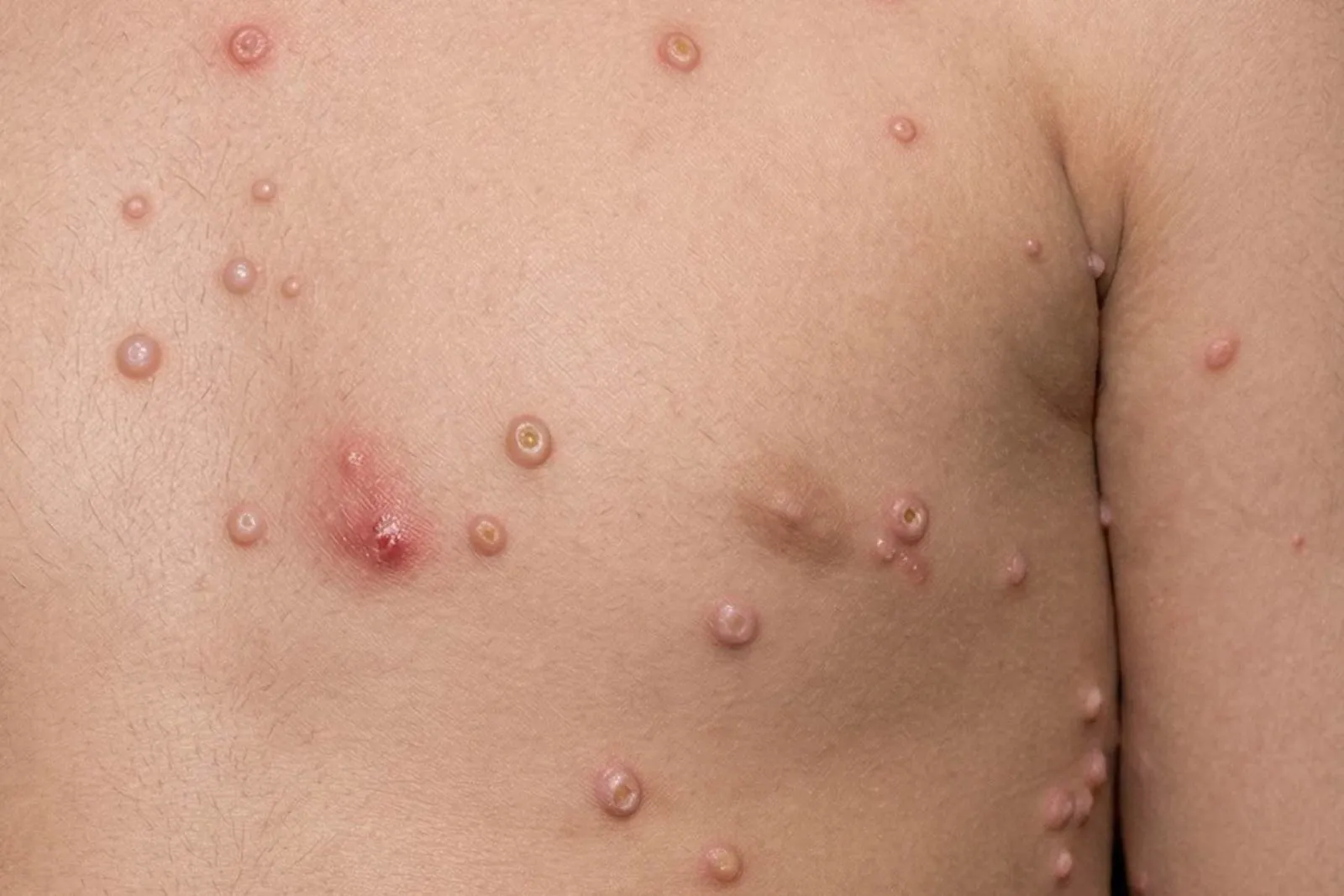
Small molluscum bumps on a child’s skin. Molluscum contagiosum is a harmless viral infection that often goes away on its own.
Treatment of molluscum contagiosum
Treatment is normally not necessary. The bumps can in principle be removed by cutting or freezing them off, but as the condition is harmless and goes away on its own, this is not normally recommended.
Removing the bumps does not reduce the risk of scarring. On the contrary, treatment can sometimes increase that risk. Treatment can also be unpleasant, particularly for children, and may create an unnecessary fear of doctors.
Precautions for molluscum contagiosum
- Avoid squeezing or scratching the bumps, as this can spread the virus and increase the risk of scarring and skin infection.
- Consider covering the bumps with waterproof plasters during contact sports or swimming.
- Avoid sharing towels and bedding to limit the spread of infection.
There are no restrictions on attending nursery, childcare, swimming or other activities.
Children with dry skin and eczema are slightly more likely to get molluscum contagiosum. It is therefore important to keep the skin well treated and apply a rich moisturising cream when needed.
Clinically updated 9 March 2026
If you are in doubt, call us
Call the clinic on 73 70 81 10