
Patient guide to vaginal thrush
This page was translated with AI. Only the Danish text has been reviewed by a human — read the Danish version.
About vaginal thrush
A fungal infection in the vagina, also called vaginal thrush, is caused by an overgrowth of yeast in the vaginal lining.
Many women naturally have yeast in the vagina without symptoms. A change in the balance of the normal bacteria can lead to an overgrowth of yeast, causing itching and discharge. This can happen with, for example, antibiotic treatment, heat or moisture, pregnancy, hormonal contraception or medicines that affect the immune system.
Vaginal thrush is not a sexually transmitted infection, meaning that in most cases it is not passed on to sexual partners. However, this can happen.
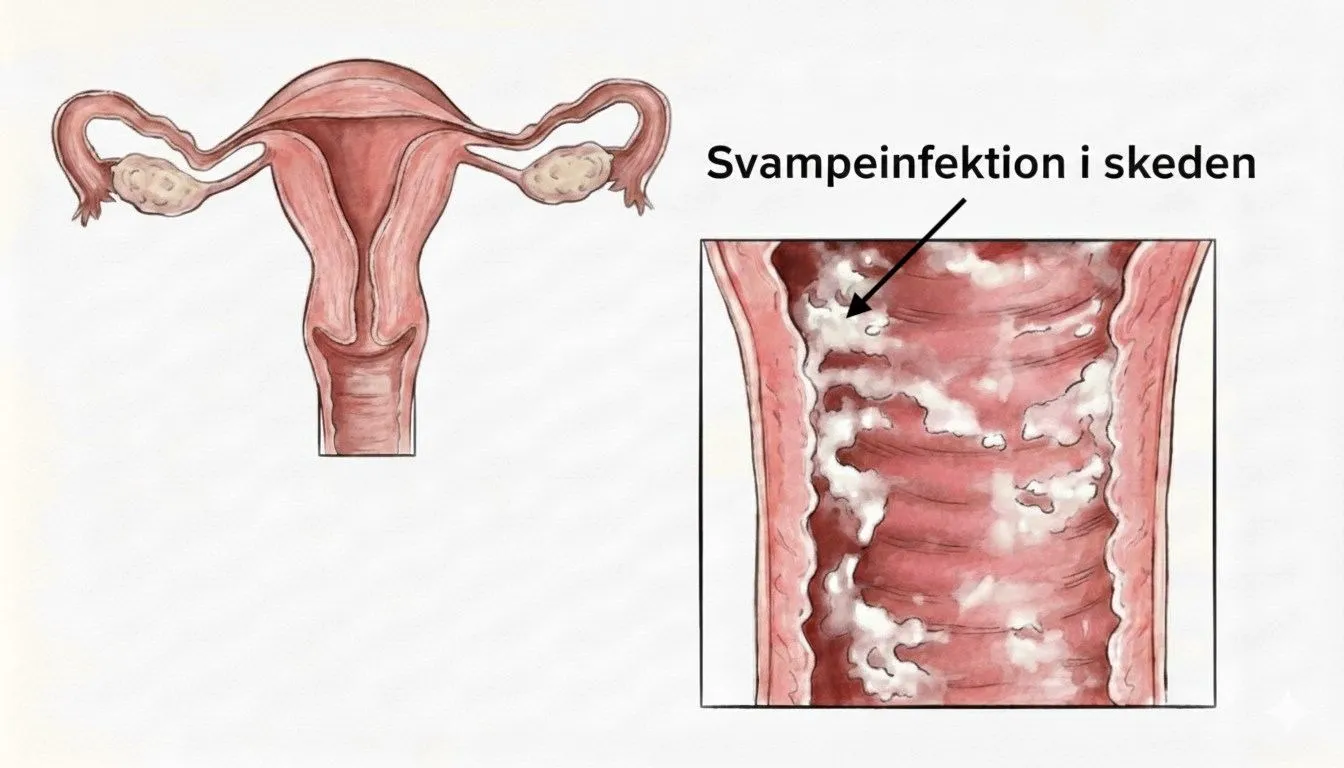
Illustration showing typical changes in the vagina with vaginal thrush
Treatment of vaginal thrush
Vaginal thrush is normally treated locally. If this does not work, systemic treatment is used. Systemic treatment is not the first choice because it can cause side effects.
Local treatment (pessaries and possibly cream)
Buy over the counter at the pharmacy:
- Canesten 500 mg pessary as a single dose
- Canesten 100 mg pessary at bedtime for 6 days
For severe itching, you can also apply cream to the external genitals 2 times daily.
Systemic treatment (tablets)
- Follow our instructions for taking the tablets (also on the medicine box).
- Read the patient information leaflet. The most common side effect is stomach pain. Contact us if you suspect serious side effects.
Precautions for vaginal thrush
- No vaginal sex or similar during local treatment: During local treatment, avoid vaginal sex and the use of tampons and other products in the vagina.
- Treatment of sexual partners is only recommended if they have symptoms.
Follow-up
- Both local treatment and tablet treatment often work quickly; itching usually improves within 1–3 days. Contact us again if there is no improvement.
Preventing vaginal thrush
- Avoid using soaps on the genitals.
- Wear cotton underwear to keep the area dry and let air reach it.
- Probiotics or lactic acid bacteria used in the vagina or taken as tablets have no proven effect against thrush. There is also no documented effect from dietary changes, for example eating less sugar. However, some people feel that these help, and these measures are not harmful.
- If you have repeated thrush infections, preventive treatment can be tried. Contact us for an appointment with a doctor for assessment.
Clinically updated 27 November 2025
If you are in doubt, call us
Call the clinic on 73 70 81 10