
Patient guide to wounds
Clinically updated
This page was translated with AI. Only the Danish text has been reviewed by a human — read the Danish version.
About wounds
Wounds can happen in many different ways. Whatever caused the wound, it is important to give the skin the best conditions for healing. Skin has an impressive ability to heal itself, and you can support this process by caring for the wound correctly.
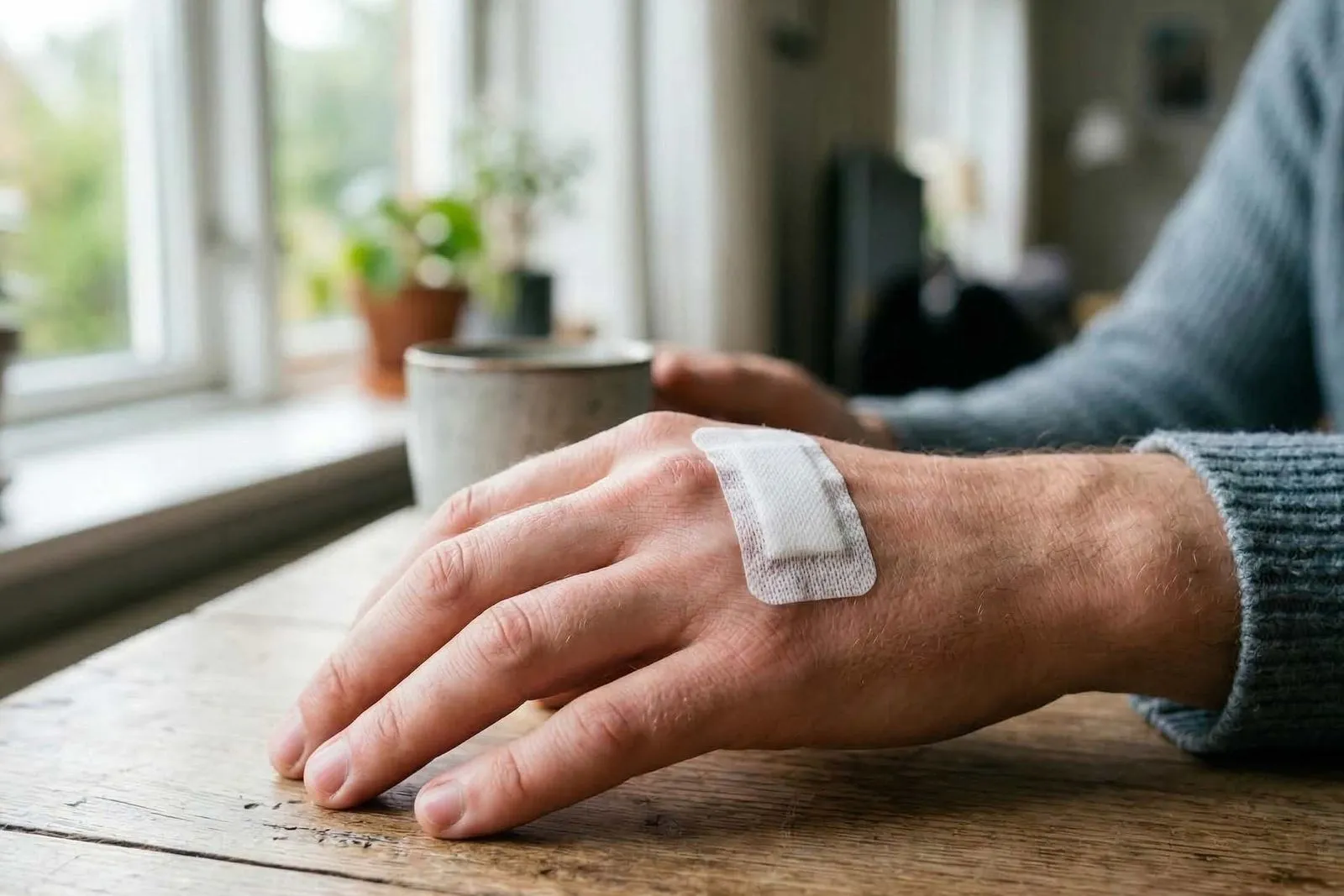
Treating wounds at home
When you have been seen at the clinic, your healthcare professional has assessed how best to care for your wound or wounds. You will also have received spoken information about treatment.
Below is general advice on what to watch for at home.
General advice
It is important to keep the dressing clean and dry. The area with the wound should also be kept reasonably still to give the skin good conditions for healing.
Dressing or plaster
The dressing or plaster you have been given needs to be changed. The clinic has told you how often to do this.
However, you may need to change the dressing earlier than planned.
Change the dressing if:
- It becomes dirty with soil, liquid or anything else.
- It becomes damaged or no longer seals properly.
- Fluid from the wound soaks through it.
Follow-up
A follow-up may have been arranged at the clinic or with a wound care nurse or community nurse.
If no follow-up is planned, you will have been told how to care for your wound yourself.
Contact the clinic if
Contact the clinic if you notice signs of infection in the wound.
Signs of infection may include:
Redness around the wound
Warmth in the skin around the wound
Swelling of the area
Thick, yellowish fluid from the wound (pus)
Increasing pain from the wound
An unpleasant smell from the wound
Fever with no other clear cause
The wound produces a lot of fluid and you need to change the dressing more often than expected
Healing is not progressing
You are unsure how to care for the wound
Looking for a new GP on Nørrebro? Read how to change doctor in Copenhagen.